Content · Edit · Social · Paid
We build the content systembehind brands that move.
Content creation, video editing, social management and paid creative — run as one workflow instead of four disconnected ones.
- 01Create
- 02Edit
- 03Manage
- 04Amplify

- Short-form edits
- Hooks & scripts
- Captions & subtitles
- Motion graphics
- Long-form repurposing
- Colour & sound polish
- Content calendars
- Ad creative variants
- Campaign architecture
- 9:16 · 1:1 · 4:5 · 16:9
- Monthly reporting
The problem
Most brands do not have a content problem. They have a handoff problem.
The ideas come from one place, the filming from another, the editing from a freelancer, the posting from whoever has time, and the ads from someone who never saw the raw footage. Every handoff loses a little of the point.
What survives is inconsistent output, creative that was never built for the placement it ends up in, and paid spend running behind organic instead of learning from it.
We close the loop. One studio holds the idea from the first hook to the last variant, and what the ads learn goes straight back into the next edit.
Capabilities
Four capabilities. One loop.
Each one works on its own. Together they stop the handoffs that quietly cost you the quality and the consistency.

01 / CREATE
Content creation
Concepts, hooks, scripts and social-first assets, planned as a running supply.
What it includes
02 / EDIT
Video editing & post-production
Short-form, long-form repurposing, captions, motion graphics, colour and sound.
What it includes
03 / MANAGE
Social media management
Channel strategy, calendar, publishing, community workflow and monthly reporting.
What it includes
04 / AMPLIFY
Meta Ads & paid social
Account structure, ad creative variants, testing roadmap, optimisation and reporting.
What it includes


How it runs
One loop, not a queue of favours.
Every cycle produces the material for the next one. Nothing restarts from zero.
- 01
Brief
What the business needs this cycle, in one page. Offer, audience, constraint.
- 02
Shot list
Concepts and hooks written down before anything is recorded.
- 03
Edit
The cut, the captions, the graphics, the sound. Where the value is made.
- 04
Adapt
One master piece reframed for every placement it has to live in.
- 05
Publish
Calendar, scheduling, platform-native copy, community windows.
- 06
Amplify
The strongest pieces carry budget. Variants test one thing at a time.
- 07
Read
What held attention, what did not, and what that means for the edit.
Step 07 is the brief for the next cycle.
Format system
One idea. Every placement it has to survive.
A piece is not finished when the cut is locked. It is finished when it works in the ratio the placement actually serves.
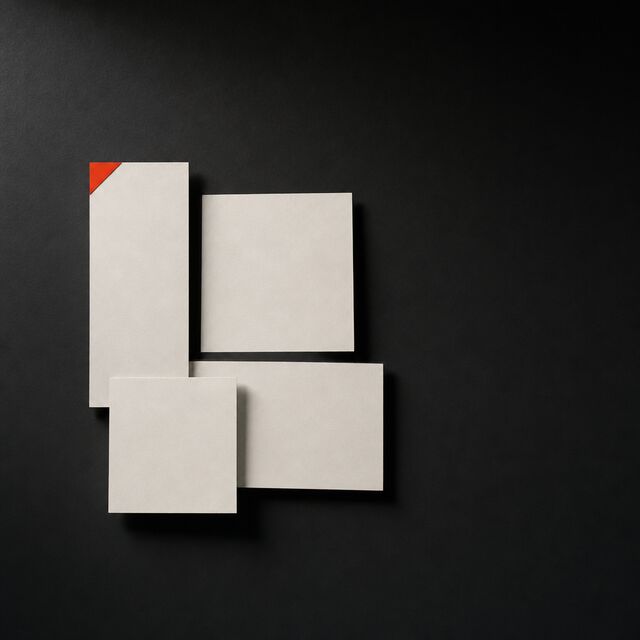
Reframed deliberately for each ratio. Never centre-cropped and hoped for.
Sample work
Six pieces we made to show the craft.
A new studio has two honest options: show nothing, or show its own work and say plainly that is what it is. We chose the second.
Every piece below was produced in-house as a demonstration. None of it is client work, none of it was published on a client account, and none of it carries a result we cannot show you the account for.
Short-form editing9:16
The first nine seconds, cut three ways
One piece of raw footage, three openings. Same story, same audio bed, three different decisions about where the video actually starts.
- The strongest opening was the one that started forty seconds into the take, after the speaker stopped explaining and began arguing.
- No music under the first two seconds. Silence reads as intent; a stock bed reads as an ad.
- The on-screen line lands on the second beat, not the first — the eye needs one beat to arrive before it can read.
You would receiveThree vertical cuts, 9:16, captioned, delivered as ready-to-post files plus the project file.
Batch production4:5
One shoot, twelve cuts
What a single half-day of filming is actually worth when it is planned as a batch instead of a one-off.
- The shot list was written backwards from the twelve posts, not forwards from the camera.
- Two setups, one lens change. Variety came from the edit, not from moving furniture for six hours.
- Every cut can stand alone. None of them depends on a viewer having seen another one.
You would receiveTwelve edits across 9:16 and 1:1, a thumbnail frame for each, and a posting order.
Post-production9:16
The caption pass nobody does
Auto-captions are eighty per cent right, which is the worst possible score. This is the pass that takes them the rest of the way.
- Line breaks follow the breath, not the character count. A caption that breaks mid-phrase makes the viewer re-read.
- Two lines maximum, always clear of the platform UI safe area — a caption hidden behind a username is a caption nobody read.
- Numbers, names and product terms are corrected by hand. Those are exactly the words the algorithm mishears and the viewer notices.
You would receiveBurned-in captions plus a clean .srt, so the same edit can be reused anywhere.


Client case studies
This studio is new, and we are not going to pretend otherwise.
The pieces on our work page are demonstrations we made ourselves. This slot — the client case studies — is empty, and it stays empty until there is a real one to put in it.
When a case study appears here it will carry the same four things every time: the situation the business was in, the work we actually produced, what was published and where, and the result with the account it came from.
No borrowed reels, no client logos we did not earn, no testimonials we wrote ourselves, no metric we cannot show you the account for. Until then, the fastest way to judge the craft is to send us fifteen minutes of your raw footage. We will cut a piece from it and talk you through the decisions, at no charge.
- SituationWhat the business needed and what was in the way.
- WorkWhat we produced. Concepts, edits, formats, campaigns.
- PublishedWhat went live, on which channels, over what period.
- ResultWhat changed, with the account it was read from.
Why work with us
Four things that are true from the first cycle.
These are structural, not aspirational. Nothing here depends on a track record we have not built yet.
One workflow, one accountable studio
The people writing the hook, cutting the edit and running the spend are the same people. There is nobody to hand the blame to, which is the point.
Editing is the core skill, not an add-on
Most agencies subcontract the cut. Post-production is what this studio is built around, and everything else is arranged so the edit gets the time it needs.
Creative built for organic and paid at once
Every concept has to hold up unpaid and carry a budget. That constraint is applied at the idea stage, not retrofitted when a campaign underperforms.
A repeatable cycle, not a burst
The system is designed for the twelfth month, not the first. Each cycle leaves behind material and a reading that makes the next one faster.
In writing
What we commit to, before you have any reason to trust us.
We have no testimonials to show you yet, and we are not going to invent any. What we can do is put our side of the deal in writing, in the contract, from the first engagement.
- 01
First cut within five working days
From the moment we have the footage and the brief. If a batch is bigger than that, you get the schedule before you get the invoice.
- 02
Two rounds of revisions included
Named in the scope, not sold back to you afterwards. A third round is a conversation about the brief, not a surcharge.
- 03
You own everything
Final files and project files, on request, at any point. No hostage-taking of masters, no proprietary format you cannot open elsewhere.
- 04
Reporting you can audit
Numbers come from your own ad account and your own analytics, with the screenshots attached. We never report a figure you cannot verify yourself.
- 05
No lock-in on the first engagement
Month to month until you have seen enough to decide. Retainers exist because they suit the work, not because they trap you.
- 06
One accountable contact
The person who edits it is the person who answers you. No account manager relaying questions to a team you never meet.
Questions
Before you get in touch.
No. The studio works remotely across the United States. We plan what gets recorded, write the scripts and shot lists, and you or your team capture it — usually on a phone. Everything after that, from the cut to the campaign, is handled here.
Raw footage or a willingness to record some, access to whoever appears on camera, and one review pass per cycle. If you already have a library of unused footage, that is often enough for a first month.
Yes. Editing and post-production is the core of the studio and works as a standalone engagement, billed per batch or as a monthly retainer. Social management and paid social are optional layers on top of it.
A freelance editor cuts what you send. We decide what should be shot, cut it, adapt it for each placement, publish it and run the paid side — and then feed what the ads learned back into the next edit. It is the same loop, held by one studio.
No, and you should be careful with anyone who does. We commit to what we control: the volume, the craft and the turnaround of the work, a testing structure that produces readable answers, and a monthly report that tells you plainly what happened.
Most engagements are a monthly retainer sized to the output you need, with editing-only batches available separately. There is no public price list because the scope genuinely differs — send a brief and you will get a specific number.
You do. Final deliverables, project files and source exports are yours. Nothing is held back as leverage at the end of an engagement.
Start here
Tell us what you are trying to move.
A short brief is enough to start. If it is a fit we will come back with how we would run the first cycle and what it costs.