Selected work
Our own work, and an honest empty shelf.
Everything on this page we made ourselves, to show how we cut, caption, schedule and test. Client case studies come later, and we will label those just as plainly.
Sample work
Six pieces we made to show the craft.
A new studio has two honest options: show nothing, or show its own work and say plainly that is what it is. We chose the second.
Every piece below was produced in-house as a demonstration. None of it is client work, none of it was published on a client account, and none of it carries a result we cannot show you the account for.

Short-form editing9:16
The first nine seconds, cut three ways
One piece of raw footage, three openings. Same story, same audio bed, three different decisions about where the video actually starts.
- The strongest opening was the one that started forty seconds into the take, after the speaker stopped explaining and began arguing.
- No music under the first two seconds. Silence reads as intent; a stock bed reads as an ad.
- The on-screen line lands on the second beat, not the first — the eye needs one beat to arrive before it can read.
You would receiveThree vertical cuts, 9:16, captioned, delivered as ready-to-post files plus the project file.

Batch production4:5
One shoot, twelve cuts
What a single half-day of filming is actually worth when it is planned as a batch instead of a one-off.
- The shot list was written backwards from the twelve posts, not forwards from the camera.
- Two setups, one lens change. Variety came from the edit, not from moving furniture for six hours.
- Every cut can stand alone. None of them depends on a viewer having seen another one.
You would receiveTwelve edits across 9:16 and 1:1, a thumbnail frame for each, and a posting order.

Post-production9:16
The caption pass nobody does
Auto-captions are eighty per cent right, which is the worst possible score. This is the pass that takes them the rest of the way.
- Line breaks follow the breath, not the character count. A caption that breaks mid-phrase makes the viewer re-read.
- Two lines maximum, always clear of the platform UI safe area — a caption hidden behind a username is a caption nobody read.
- Numbers, names and product terms are corrected by hand. Those are exactly the words the algorithm mishears and the viewer notices.
You would receiveBurned-in captions plus a clean .srt, so the same edit can be reused anywhere.

Social management1:1
A month of calendar, built from one batch
What the schedule behind a consistent account looks like — including the three slots deliberately left empty.
- Three slots per month stay unplanned, reserved for whatever the week actually gives you. A calendar with no slack gets abandoned by week three.
- Each post carries its own first comment and its own reply plan. Publishing is not the end of the job.
- The batch is filmed once and cut across four weeks, so consistency does not depend on anyone feeling inspired on a Tuesday.
You would receiveA published calendar, scheduled posts, caption copy, and the weekly report that follows them.
Paid creative16:9
Six ad variants from one frame
A test set built so the result means something: one variable changes at a time, and every variant is genuinely deliverable.
- Hook, framing and call to action are tested separately. Change three things at once and a winning ad teaches you nothing.
- Every variant is cut to the same length so the comparison is not secretly a comparison of watch time.
- The losing cuts are kept. They are the cheapest brief for the next round.
You would receiveSix variants in feed and story ratios, a naming convention, and the test plan behind them.
Finishing16:9
What a grade and a sound pass actually change
The same footage before and after the last two hours of work — the two hours most people skip.
- Exposure matched shot to shot first. Colour looks broken when it is really brightness drifting between takes.
- Room tone under every cut. Silence between clips is the loudest thing in an amateur edit.
- Loudness normalised for phone speakers, not for studio monitors. That is where it will actually be heard.
You would receiveGraded, mixed masters plus a phone-optimised version of each cut.


Client case studies
This studio is new, and we are not going to pretend otherwise.
The pieces on our work page are demonstrations we made ourselves. This slot — the client case studies — is empty, and it stays empty until there is a real one to put in it.
When a case study appears here it will carry the same four things every time: the situation the business was in, the work we actually produced, what was published and where, and the result with the account it came from.
No borrowed reels, no client logos we did not earn, no testimonials we wrote ourselves, no metric we cannot show you the account for. Until then, the fastest way to judge the craft is to send us fifteen minutes of your raw footage. We will cut a piece from it and talk you through the decisions, at no charge.
- SituationWhat the business needed and what was in the way.
- WorkWhat we produced. Concepts, edits, formats, campaigns.
- PublishedWhat went live, on which channels, over what period.
- ResultWhat changed, with the account it was read from.
In writing
What we commit to, before you have any reason to trust us.
We have no testimonials to show you yet, and we are not going to invent any. What we can do is put our side of the deal in writing, in the contract, from the first engagement.
- 01
First cut within five working days
From the moment we have the footage and the brief. If a batch is bigger than that, you get the schedule before you get the invoice.
- 02
Two rounds of revisions included
Named in the scope, not sold back to you afterwards. A third round is a conversation about the brief, not a surcharge.
- 03
You own everything
Final files and project files, on request, at any point. No hostage-taking of masters, no proprietary format you cannot open elsewhere.
- 04
Reporting you can audit
Numbers come from your own ad account and your own analytics, with the screenshots attached. We never report a figure you cannot verify yourself.
- 05
No lock-in on the first engagement
Month to month until you have seen enough to decide. Retainers exist because they suit the work, not because they trap you.
- 06
One accountable contact
The person who edits it is the person who answers you. No account manager relaying questions to a team you never meet.
Format system
One idea. Every placement it has to survive.
A piece is not finished when the cut is locked. It is finished when it works in the ratio the placement actually serves.
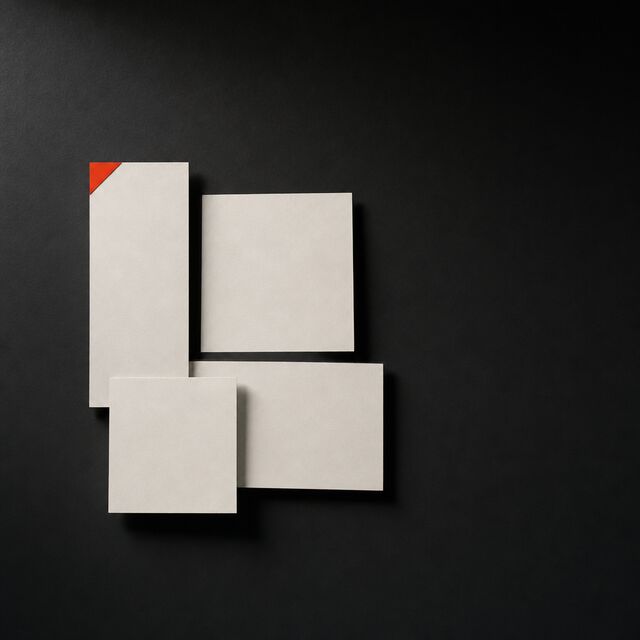
Reframed deliberately for each ratio. Never centre-cropped and hoped for.
Start here
Tell us what you are trying to move.
A short brief is enough to start. If it is a fit we will come back with how we would run the first cycle and what it costs.